
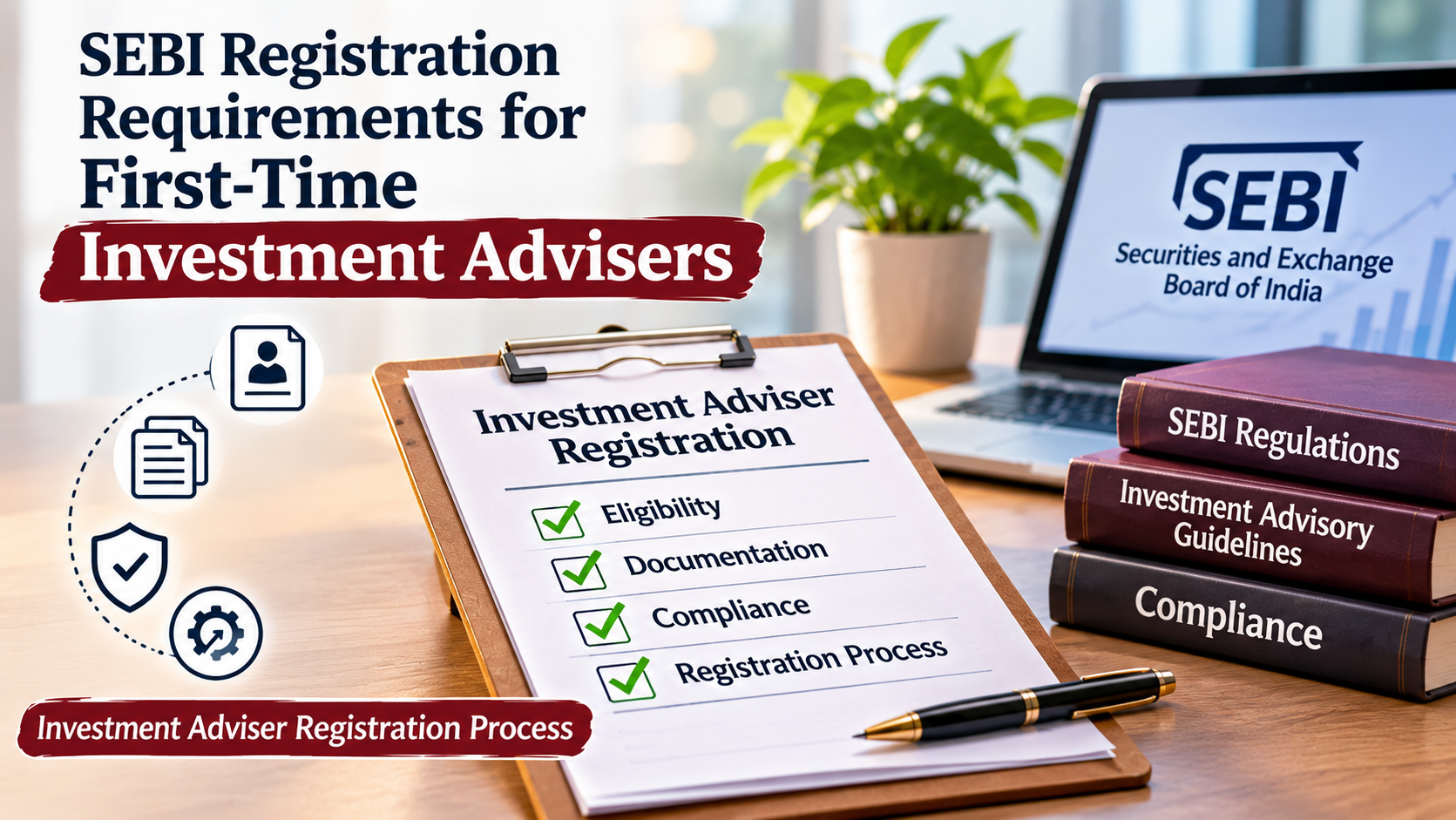
So, you have been learning about financial markets and helping people understand their investments. Now you want to offer investment advice as a professional. Before doing this, you will need to be sure you are legally able to do so. Understanding how the Investment Adviser Registration Process works will help individuals and businesses who wish to offer investment advisory services as part of a regulated industry in India. Before applying to be registered you should understand the requirements for Investment Adviser Registration in India. These include eligibility, qualification, certification and compliance requirements.
What Are SEBI’s RIA Registration Requirements?
To register with SEBI as an investment adviser you will need to meet certain requirements. Main requirements usually include:
- Meeting the criteria of any education or certification required.
- Meeting the fit and proper requirements.
- Choosing the right type of registration.
- Completing the correct documentation.
- Paying any relevant fees.
- Paying any deposits.
- Setting up the correct compliance.
Depending on what type of individual or entity you are applying as, there will be different requirements.
Investment Adviser Registration Process
The main requirements for the Investment Adviser Registration Process will be found under the SEBI (Investment Advisers) Regulations 2013 (as amended). There may also be additional requirements from relevant circulars and guidelines.
Registering as an investment adviser will give you a framework to work within when advising clients. The regulations cover things like;
- Qualifications.
- Client protection.
- Disclosure.
- Fees.
- Professionalism.
Who Needs Registration?
Anyone who offers investment advice for consideration may need to register with SEBI. This could be an individual or entity. Investment advice could include recommending securities, investment products and investment portfolios.
However, not everyone who offers advice about financial markets will need to register. Consider what kind of advice you are offering, how you are being compensated and if you are exempt.
Eligibility Requirements for First-Time Advisers
Before applying for registration you should consider if you meet any eligibility requirements.
Having experience within financial markets is not enough. You should consider your qualifications, certifications, professionalism and any regulation requirements.
Qualifications & Certifications
SEBI have set out certain requirements for investment advisers and relevant staff. Depending on what type of individual/entity you are applying as and what requirements apply, you may need;
- Relevant qualifications.
- Recognised professional qualifications.
- Any relevant NISM certifications.
- Certifications renewed.
- Qualified staff.
Check the latest regulations to ensure you know exactly what you need.
Fit and Proper
You will need to meet the fit and proper requirements. These requirements will help to ensure that you are suitable to advise as a regulated intermediary. Considerations may include:
- Integrity.
- Regulatory history.
- Any relevant disciplinary actions.
- Financial and legal considerations.
- Other considerations set out under relevant regulations.
It is important to provide accurate information.
Individual & Non-Individual Investment Advisors
Consider which type of registration you should apply for. If you are an individual investment adviser, you will be working alone, whereas a non-individual investment adviser may need to operate within an eligible business structure and meet additional requirements related to staffing.
For example; If you are an individual adviser and reach certain thresholds of clients you may need to become a non-individual.
Documents Required for SEBI RIA Registration
By preparing your documentation beforehand you can avoid unnecessary questions.
The documentation required for SEBI investment adviser registration depends on the applicant’s category and circumstances.
- Proof of identity/address.
- Proof of qualifications.
- Proof of any relevant certifications.
- Proof of registration for your business/entity.
- Details of directors/staff.
- Details of what advice you will be offering.
- Declarations and disclosures.
- Other documents.
Ensure that information is consistent throughout your application. Small inconsistencies can cause questions.
Step-by-Step Investment Adviser Registration Process
The Investment Adviser Registration Process involves several stages, from assessing eligibility to completing the applicable registration formalities.
Step 1: Check Eligibility
Check what the current requirements are from SEBI.
Ensure you know what advice you will be offering, what type of individual/entity you are, your qualifications and certifications.
Step 2: Prepare Documentation
Gather your personal, professional and business information.
Ensure any declarations are accurate.
Step 3: Apply
Applications will be handled under the correct registration process. This could be through the recognised Investment Adviser Administration and Supervisory Body (IAASB).
Follow the current instructions.
Step 4: Application Review
Your application may go through a review to ensure it is complete and meets any requirements.
You may be asked for additional information.
Step 5: Complete Registration Requirements
Once you have met all of the requirements you will need to pay the correct fees, deposits and any other requirements.
Once you have registered you should confirm this before starting any activities that require authorisation.
Application Questions
You may be asked questions to verify your qualifications, business and any supporting documentation. To avoid delays:
- Answer within the required timeframes.
- Ensure any supporting documents are accurate.
- Ensure information is consistent.
- Keep track of any official communications.
- Keep copies of your submission.
Having clear documentation can make the process easier.
SEBI RIA Registration Fees & Deposits
Understanding SEBI RIA registration fees is important when planning your advisory business. You may be asked to pay a registration fee, along with any administration fees and other costs.
Under the new regulations you may also be required to pay a deposit. This will depend on what category of clients you fall into. The exact fees will depend on what regulations apply and what type of individual/entity you are. Before applying, check the latest official fee guidelines.
Post Registration Compliance
Once you have registered you will need to meet the requirements. This will help to protect clients.
Client Agreements, Risk Profiling
Investment advisers will need to meet requirements around client agreements, risk profiling and suitability. Before making any recommendations you should understand the clients’ circumstances.
This may include:
- Financial goals.
- Investment experience.
- Risk tolerance.
- Investment time frame.
- Relevant financial factors.
Recommendations should be made in line with the clients’ needs and suitability.
Record Keeping & Conflicts of Interest
Registered investment advisers will need to keep records and manage conflicts of interest. This may include:
- Keeping client information.
- Keeping records of advice and assessments.
- Making any required disclosures.
- Meeting any fee requirements.
- Managing conflicts of interest.
- Meeting audit and reporting requirements.
Investment advisers should also consider any restrictions around distribution and related party arrangements.
Common Errors When Registering
Sometimes first-time applicants will not consider what they need to do post-registration. Common errors include:
- Applying without checking eligibility.
- Using expired certifications.
- Inconsistent documentation.
- Incorrect business structure.
- Not knowing the fees.
- Not paying deposits.
- Not considering compliance.
- Starting regulated advisory activities before registering.
By considering the requirements beforehand you can avoid unnecessary issues.
Practical Preparation Checklist
By breaking down the process you can make it easier. Before applying:
- Check if you are eligible.
- Check your certifications.
- Choose the correct type of individual/entity.
- Prepare supporting documentation.
- Check what the current registration fees and deposits are.
- Set up policies and procedures.
- Apply using the correct process.
This can help you to identify any issues.
FAQs:
Yes. Individuals can apply if they satisfy the applicable eligibility, qualification, certification and other regulatory requirements.
Usually yes. Depending on who you are and the relevant staff you will need to meet NISM requirements.
This will depend on how complete your application is, how long verification takes and how many clarifications you get.
This will depend on what fees/deposits you are referring to. Check the current official requirements.
Investment advisers must meet any restrictions around advisory and distribution. This will depend on if you are an individual or non-individual.
Activities that require registration shouldn’t be started until you have received the relevant authorisation. Unless you are exempt.
Conclusion
Becoming a registered investment adviser requires careful preparation. You need to ensure you have the correct qualifications and understand what regulations you will have to meet. By following the Investment Adviser Registration Process you can ensure you understand what eligibility requirements you have, prepare your documentation and put in place the correct compliance. Once registered you will have to meet any requirements around professionalism and protecting clients. If you are an individual or business looking for professional guidance you may want to work with a SEBI RIA registration consultant in India to understand the process, documentation and regulations.