
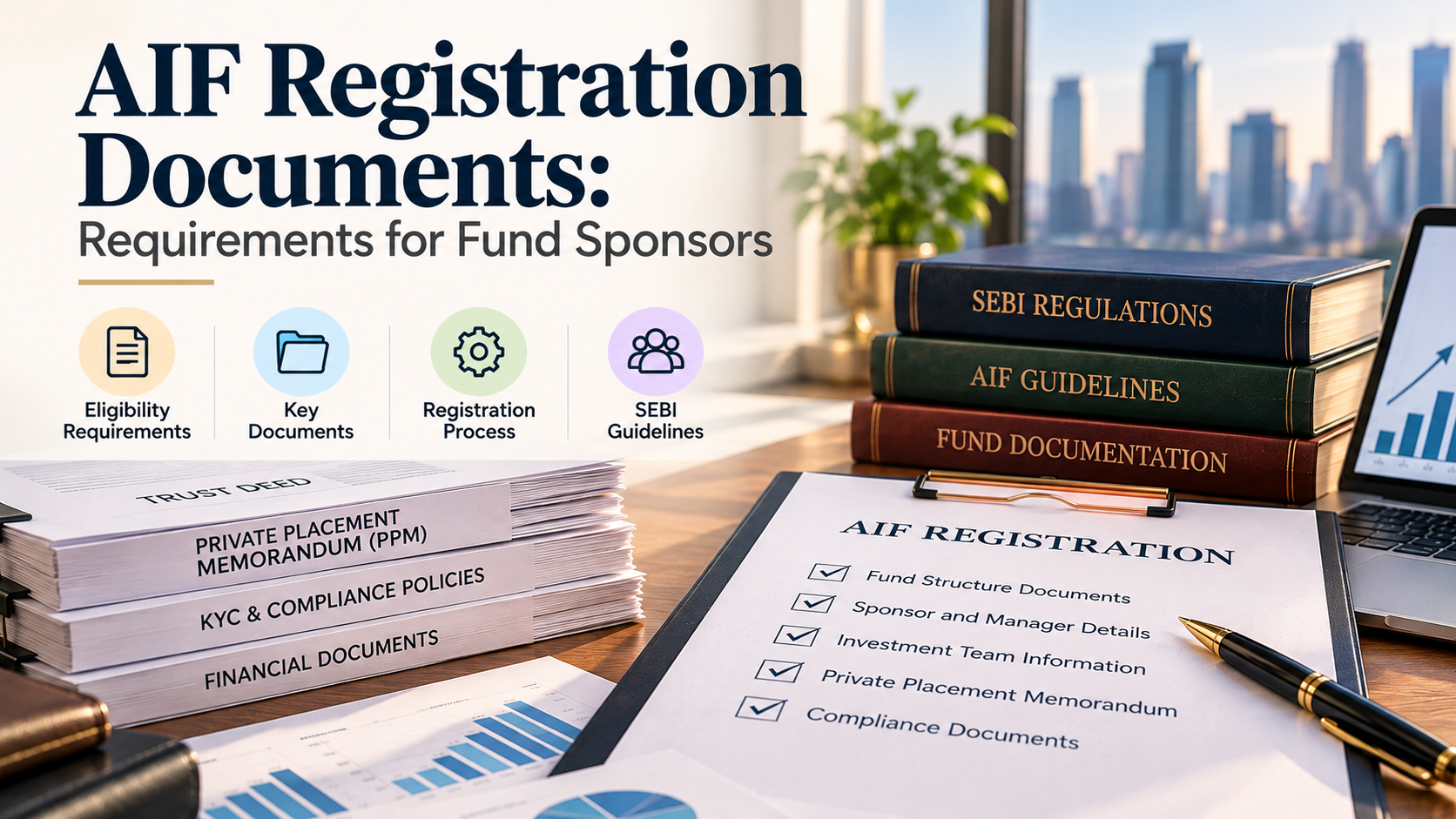
Planning to start an investment fund in India? Before you begin approaching investors or discussing investment opportunities, there’s one important thing to sort out: SEBI registration. If you’re starting an Alternative Investment Fund (AIF) you have to meet rules get the right papers ready and understand about the AIF registration documents.
AIF Registration in India means that the people who start the fund have to pick the type of fund create a proper legal setup get the official papers and fund documents ready show that they have the needed money and know-how and then ask SEBI to register the fund. The exact things you need depend on the kind of AIF you are creating.
Think about a team of investment experts who want to start a private equity fund. They know the market have people who want to invest and have ideas about which companies to put money into.
When they start getting their application ready they find out that just having an investment plan isn’t enough. They also need fund documents, a strong management setup rules to follow and information about how much money the people, behind the fund are putting in. This is where planning ahead makes a difference. If you’re considering starting an AIF, here’s what you should know before beginning the registration process.
What Is an Alternative Investment Fund (AIF)?
An Alternative Investment Fund is a pooled investment vehicle that collects money from investors and invests following a clear investment policy.
In India AIFs are regulated by SEBI under the SEBI (Alternative Investment Funds) Regulations, 2012 as amended, which sets the rules for how they operate.
Unlike a mutual fund an AIF usually serves investors who can meet higher investment thresholds and who understand the risks involved.
AIFs may invest in areas such, as startups, private companies, infrastructure, real estate‑related opportunities or other permitted investments depending on their category and strategy.
Understanding the Three AIF Categories
Before applying for registration, you need to decide which category suits your proposed fund.
Category I AIF
This category generally includes funds investing in areas considered socially or economically desirable, such as venture capital, startups, infrastructure, and certain other eligible sectors.
Category II AIF
This includes funds such as private equity and debt funds that don’t fall under Category I or III and don’t undertake leverage or borrowing except as permitted by the regulations.
Category III AIF
These funds may use more complex trading strategies and may employ leverage, subject to applicable regulatory conditions.
Choosing the correct category matters because investment restrictions, operating requirements, and compliance obligations aren’t identical across all three.
Who Can Apply for AIF Registration in India?
Not every business can simply start collecting money and call itself an AIF.
SEBI has specific eligibility requirements for the applicant, sponsor, manager, and key investment personnel.
1. The Fund Must Have an Eligible Legal Structure
An AIF can be established in India as a:
- Trust
- Company
- Limited Liability Partnership (LLP)
- Body corporate permitted under the regulations
Many Indian AIFs use a trust structure, although the appropriate choice depends on the fund’s needs.
For example, if you’re establishing a trust, you’ll need a properly drafted trust deed and relevant registration documents. The constitutional documents should permit the proposed AIF activities.
2. The Sponsor and Manager Must Meet Regulatory Requirements
The sponsor is the person or entity responsible for setting up the AIF, while the manager is responsible for managing its investments.
They may be different entities. SEBI examines whether the sponsor and manager satisfy the applicable fit-and-proper requirements.
The manager must also meet the regulatory requirements concerning its investment team, infrastructure, and operational capability. This includes having suitably qualified and experienced key investment personnel.
3. The Fund Must Have a Clear Investment Strategy
You can’t simply state that the fund will invest wherever good opportunities arise. SEBI expects a defined investment strategy.
Your documents should explain the types of investments the fund intends to make, the target sectors or assets, the investment approach, and the risks involved.
For example, a venture capital fund focusing on early-stage technology companies will have a different strategy from a fund investing in established businesses.
Documents Required for AIF Registration
One of the most time-consuming parts of the application is preparing the documentation.
The documents required for AIF registration depend on the fund’s legal structure, category, and applicable SEBI requirements.
However, most applicants will need to prepare documents covering the following areas.
1. Fund Formation Documents
These establish the legal identity of the proposed AIF.
Depending on the structure, they may include:
- Trust deed
- Certificate of incorporation or registration
- LLP agreement, where applicable
- Memorandum and Articles of Association, where applicable
- PAN and other relevant identification details
- Registered office details
Make sure the documents are consistent with the proposed fund structure.
2. Sponsor and Manager Details
SEBI needs to understand who is establishing and managing the fund.
Applicants may need to provide:
- Sponsor and manager identification details
- Ownership and shareholding information
- Details of directors, partners, or trustees
- Financial information and supporting records
- Relevant declarations and undertakings
- Fit-and-proper information
If different entities are acting as sponsor and manager, their roles and relationships should be clearly documented.
3. Investment Team Information
The experience and qualifications of the people making investment decisions are important.
You’ll usually need details, about the investment team members. This includes their education work history and any other certifications needed by the rules that apply.
The manager must show that its investment team meets today’s standards.
4. Private Placement Memorandum (PPM)
The Private Placement Memorandum is one of the most important documents in an AIF setup.
It’s the document prospective investors use to understand what they’re investing in.
A PPM generally covers:
- Fund objectives and investment strategy
- Fund category and structure
- Key terms offered to investors
- Fees and expenses
- Risk factors
- Governance arrangements
- Conflicts of interest
- Distribution and exit arrangements
- Other prescribed disclosures
The PPM must follow the applicable SEBI requirements and prescribed format, including relevant due diligence requirements and exemptions.
It shouldn’t be treated as a marketing brochure. Investors rely on it to understand the fund’s terms and risks.
5. Compliance and Operational Documents
Depending on the fund, SEBI may also require details or supporting documents relating to:
- Compliance policies
- Anti-money laundering and KYC arrangements
- Valuation procedures
- Custodian arrangements
- Risk management
- Conflicts of interest
- Recordkeeping and reporting
- Other applicable operational requirements
The final checklist should be prepared according to the current regulations, SEBI circulars, and application instructions.
AIF Registration Process in India: Step by Step
Once the fund structure and documents are ready, you can begin the formal application.
The AIF registration process in India involves more than submitting a form. SEBI reviews the proposed fund and may request additional information or clarification.
Step 1: Decide the Fund Category and Structure
Start by deciding whether your fund belongs under Category I, II, or III. Then choose the legal structure and establish the fund entity.
You should also identify the sponsor, manager, trustees where applicable, and other key parties.
Step 2: Prepare the Application and Supporting Documents
The registration application is made in the prescribed form, generally Form A under the AIF Regulations.
You’ll need to provide the required disclosures, constitutional documents, sponsor and manager information, and other supporting records.
Check the latest SEBI instructions before filing because documentation and procedural requirements may change.
Step 3: Submit the Application to SEBI
Submit the application through the prescribed SEBI process and pay the applicable application fee. Make sure the information is complete and consistent.
Even small differences between the application, trust deed, and supporting documents can lead to additional questions.
Step 4: Respond to SEBI’s Queries
SEBI may ask for clarifications, corrections, or additional documents.
For example, the regulator might seek more information about the investment strategy, manager’s experience, ownership structure, or fund documentation. Responding accurately and promptly can help avoid unnecessary delays.
Step 5: Complete Registration Formalities
If SEBI is satisfied that the applicable requirements have been met, the registration process can proceed, subject to payment of the prescribed registration fee and other formalities.
Once registered, the AIF must continue complying with the relevant SEBI regulations and conditions. Registration isn’t permission to ignore the fund’s ongoing obligations.
Important Financial Requirements for Fund Sponsors
Before applying, sponsors should understand the financial commitments involved.
Minimum Corpus
Under the general AIF framework, a scheme ordinarily needs a minimum corpus of ₹20 crore.
Certain categories, including specified angel fund arrangements, may be subject to different rules.
Minimum Investment by Investors
The general minimum investment threshold is ₹1 crore per investor, subject to prescribed exceptions.
Different requirements may apply to eligible employees, directors, and certain other investor categories.
Sponsor or Manager’s Continuing Interest
Under the general rules, the sponsor or manager must maintain a continuing interest in the AIF.
For Category I and II AIFs, this is generally at least 2.5% of the corpus or ₹5 crore, whichever is lower.
For Category III AIFs, it is generally at least 5% of the corpus or ₹10 crore, whichever is lower.
Special rules and exceptions can apply to particular fund types. These requirements are important because they affect how much capital the sponsor or manager needs to commit.
Common Mistakes Fund Sponsors Should Avoid
Setting up an AIF involves several moving parts, and problems often begin before the application is filed.
Here is the input from the user:
Choosing the category: Your investment strategy needs to fit the category you are applying for.
Preparing documents: The application, the constitutional documents and the PPM must all say the same thing, about the fund.
Overlooking manager requirements: A good investment idea is not enough. You also need a team that’s properly qualified and has the right operational resources.
Underestimating compliance costs: Registration fees are just part of the cost. Legal work, audits, administration, custody, valuation and other compliance costs can also add up.
Assuming registration is the step: AIFs have ongoing duties. These include reporting, governance, investment rules and other regulatory tasks.
Fixing these problems early can save a lot of time in the future.
Should You Hire an AIF Registration Consultant?
If you’re setting up an AIF for the first time, it’s easy to underestimate the work involved.
You need to coordinate fund formation, documentation, regulatory filings, investment terms, and operational arrangements.
An experienced professional can help you understand the requirements, identify documentation gaps, and coordinate the registration process.
For businesses considering professional support, BIAT Consultant’s AIF registration services can be a starting point for discussing the proposed fund structure and application requirements.
However, no consultant can guarantee SEBI approval. Registration depends on satisfying the applicable regulatory conditions.
Frequently Asked Questions: AIF Registration Documents
The documents usually include records of how the fund was created details about the sponsor and manager information, about the people who invest the Private Placement Memorandum, financial records, declarations and other compliance paperwork. The exact list changes depending on how the fund’s set up and what SEBI wants right now.
Under the general framework, an AIF scheme ordinarily requires a minimum corpus of ₹20 crore. The sponsor or manager must also meet the applicable continuing interest requirement. Different rules may apply to certain fund categories.
There isn’t one guaranteed timeline for every application. The time depends on document readiness the complexity of the fund structure SEBIs review and whether additional clarifications are required.
An individual can be a sponsor if the plan they are suggesting follows the rules that apply.. The fund has to have a legal structure that is allowed. Also the person who is the sponsor and the person who is the manager must meet the conditions.
Conclusion
Starting an Alternative Investment Fund is not about finding investors or picking investment targets. You need the right fund structure, a sponsor and manager. You need documents that’re properly prepared, a clear understanding of what SEBI requires.
If you’re planning AIF Registration in India begin with the basics. First decide which fund category you want. Then check if you meet the eligibility conditions. Next, Prepare all the documents required for AIF Registration.
Pay attention to the PPM. Make sure the sponsor details are accurate. Double-check the investment team information. Confirm all financial commitments are clear and correct. Even a prepared application doesn’t guarantee approval.. It can help you avoid simple mistakes. It also makes the entire registration process easier to handle.
If you’re not familiar with the rules consider getting help early on. Guidance, during the planning stage can lead to choices. It helps you avoid wasting time and money before you even start.