
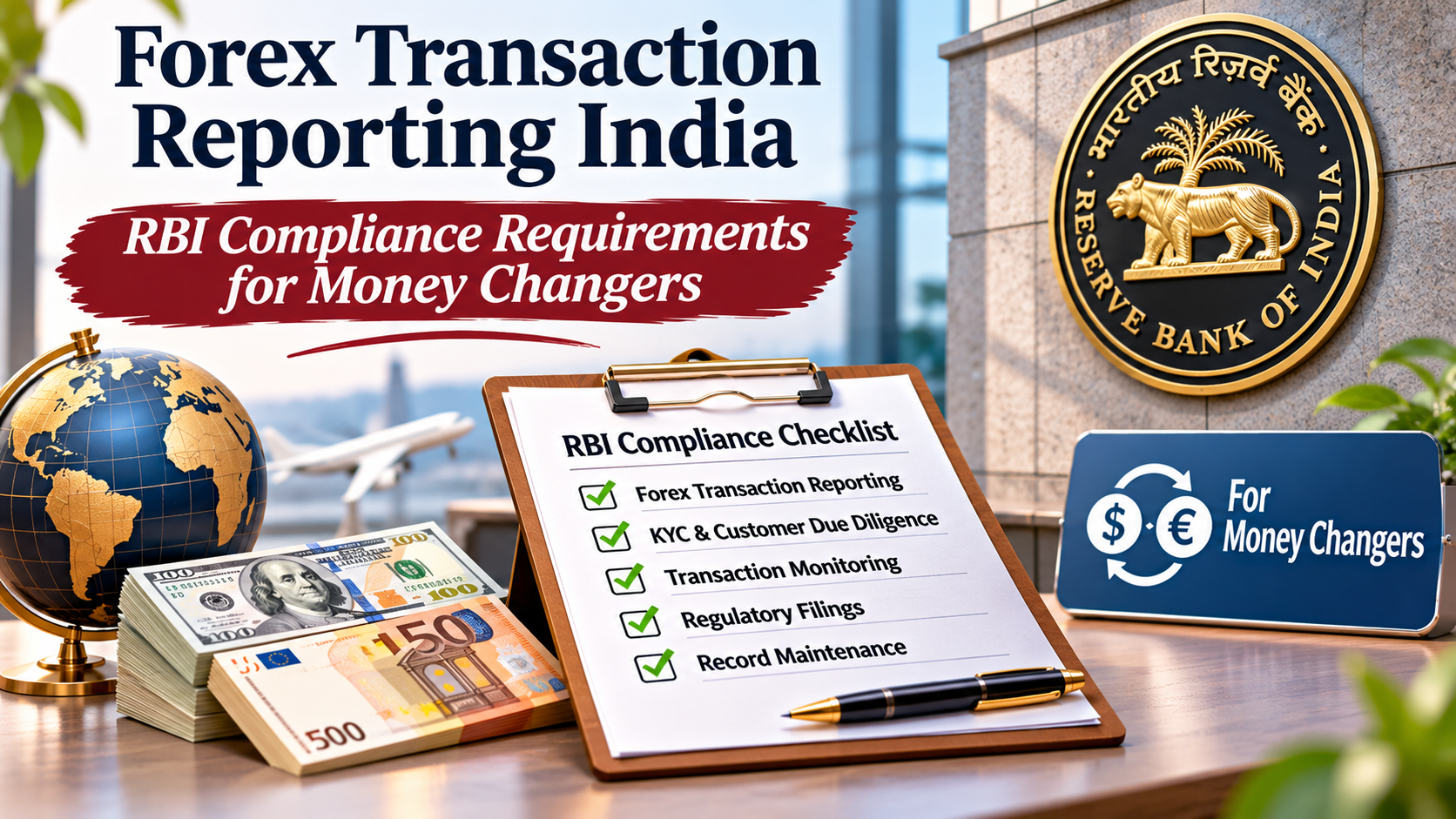
If you’re involved in a money changing business, you will need to ensure that all transactions are properly documented, and any regulatory reporting requirements met. Making small errors when reporting can cause issues when being inspected. Understanding Forex Transaction Reporting India requirements is important for Full Fledged Money Changers (FFMCs) and other authorised entities. The Reserve Bank of India (RBI) regulates money-changing activities under the Foreign Exchange Management Act, 1999 (FEMA). Businesses must maintain accurate records, follow applicable reporting procedures and ensure that their operations remain compliant. Professional assistance with FFMC registration in India can help applicants understand the authorisation process and related compliance responsibilities.
What Are RBI’s Forex Reporting Requirements?
The RBI requires any authorised money changers to keep records of transactions and complete the relevant regulatory reports. The following are some key requirements for FFMCs:
- Keep accurate records of foreign currency transactions.
- Complete the relevant monthly FLM-8 reports.
- Complete Know Your Customer (KYC).
- Monitor any suspicious transactions.
- Keep accurate records for inspection.
- Report any relevant franchisee arrangements.
- Complete the relevant anti-money laundering requirements.
Several requirements have been updated by the RBI in June 2026 so it’s important to stay up to date with the latest guidance.
Understanding Forex Transaction Reporting India
Forex transaction reporting ensures that any authorised foreign exchange activity is monitored by the regulator. For money changers, this means you will need to report your transactions.
If you buy foreign currency from customers and sell to travellers, you’ll want to ensure your records are accurate. Completing accurate reports will ensure:
- Transparency within your foreign exchange activity.
- Accurate currency balances.
- Identification of any unusual transactions.
- Meeting requirements set out by FEMA.
- Being prepared for inspection by the RBI.
Keeping accurate records throughout the month will make the regulatory reporting much easier.
Who Must Follow RBI Forex Reporting Requirements?
Anyone who is authorised to carry out foreign exchange activity will need to report. This could include:
- Full Fledged Money Changers.
- Non-bank Authorised Dealers Category-II
- Other authorised persons.
However, the requirements will vary. FFMCs will need to work within their authorisation provided by the RBI. If you’re looking to get into this sector, it’s important to understand what you need to do to get licensed and what the requirements are.
Getting professional help with registering as an FFMC in India can help you understand what you need to do to get authorised and what your responsibilities are.
Key Reporting Requirements for FFMCs
FFMC regulatory compliance requires businesses to maintain proper transaction information and submit applicable statements within prescribed timelines.
Transaction Records
You’ll need to keep full and accurate records of your foreign exchange transactions.
Whilst the RBI have removed the requirement to complete the FLM-1 to FLM-7 forms in June 2026, you’ll still need to keep accurate records that can be provided during supervision/inspection. These should include:
- Date of transaction.
- Currency bought/sold.
- Amount.
- Exchange rate.
- Customer information (if required).
- Supporting documentation.
- Currency balance.
You should also regularly reconcile your records.
Monthly Reporting
One of the key requirements is to complete the monthly FLM-8 report showing any foreign currency note purchases and sales.
This should generally be completed using the APConnect system by the 10 th of the following month. The new format also includes any foreign currency notes that have been written off.
Those who hold Nostro accounts and report the relevant transactions via the FETERS system are exempt from completing the FLM-8 reports.
Anyone who has a franchisee arrangement will also need to complete the relevant list within 15 days of the end of each calendar quarter.
Suspicious Transaction Reporting
As money changers you will also need to consider any requirements surrounding anti-money laundering.
If there are any suspicious transactions you may need to report these to the Financial Intelligence Unit–India (FIU-IND).
This could include any unusual activity, mismatched customer information or anything that shows potential illegal activity. You should have a process in place to identify and escalate these.
KYC and AML Compliance for Money Changers
KYC and anti-money laundering are very important when dealing with foreign exchange. You should not treat customer verification as a formality.
Customer Verification
Depending on the type of transaction and requirements, you may need to complete the following:
- Verify customer documentation.
- Record customer information.
- Understand the reason for the transaction.
- Ensure you are within any transaction limits.
- Keep supporting documentation.
- Complete Enhanced Due Diligence.
These requirements will depend on the type of transaction and the relevant RBI guidance.
Unusual Transactions
You should also identify any transactions that look unusual. This could include:
- Multiple unusual transactions.
- Mismatched customer information.
- Unusual patterns.
- Unwillingness to provide required documentation.
- No reasonable explanation.
Whilst this does not necessarily mean there is something wrong, you may need to investigate further.
Documents Required for Forex Transaction Reporting
Having the correct documentation in place will help you complete your reports accurately and answer any questions from the regulator. This could include:
- Receipts/vouchers.
- Customer identification.
- Details of currency bought/sold.
- Exchange rates.
- Supporting declarations.
- Reconciliation.
- Relevant compliance reports.
Depending on the type of transaction and current guidance, you may need to keep different documentation.
Internal Controls and Record Retention
Effective Forex Transaction Reporting India compliance depends on having reliable internal systems.
Ensure that there is a clear process in place for recording transactions, investigating discrepancies and completing your reports. Some useful internal controls to have in place include:
- Daily reconciliation.
- Regular currency reconciliation.
- Limit access to sensitive documents.
- Regular compliance checks.
- Training.
- Secure storage.
- Quickly correcting any errors identified.
Ensure you are keeping your records for the required period as per the relevant FEMA, RBI and anti-money laundering requirements.
Common Errors When Reporting
Even experienced money changers can experience issues with meeting requirements if their reporting isn’t well organised. Common errors include:
- Not keeping full transaction records.
- Incorrect currency balances.
- No customer documentation.
- Late regulatory reporting.
- Using old formats.
- No good reconciliation.
- No monitoring of suspicious transactions.
- Not reviewing any regulatory updates.
Understanding Forex Transaction Reporting India requirements can help businesses identify these problems before they lead to regulatory concerns.
Simple Compliance Checklist for FFMCs
Creating a simple compliance checklist can help make things easier for you on a daily basis. Before completing any reports, you should:
- Check your transaction records.
- Ensure your opening and closing balances match.
- Check the amount of currency you’ve bought/sold.
- Ensure you’re using the correct format.
- Check you have supporting documentation.
- Identify any unusual transactions.
- Check the deadlines.
- Have the correct internal approvals.
- Keep a record of what you’ve submitted.
- Review any outstanding compliance issues.
This can help reduce errors and prepare you for an inspection.
Consequences of Not Meeting Requirements
If you fail to meet the relevant requirements set out by FEMA and the RBI you may experience issues with the regulator. This can include:
- Comments.
- Requests for clarification.
- Directives to improve.
- Monetary penalties where applicable.
- Limitations on your authorised activity.
- Suspension/cancellation of your authorisation in severe cases.
This will depend on the nature of the breach and relevant legal requirements.
Professional Help with FFMC Compliance
Managing Forex Transaction Reporting India requirements can become challenging as transaction volumes increase. Getting professional help with your compliance can help you review your reporting, keep your documentation and be prepared for inspection.
Whenever there are changes to RBI guidance you should consider reviewing your processes. Having a clear compliance process can help reduce uncertainty and ensure your business can run smoothly in the future.
FAQs:
FLM-8 is a monthly report showing any purchases and sales of foreign currency notes. This should be completed according to the relevant RBI guidance.
Generally, you should complete this report by the 10th of the following month according to the relevant RBI guidance.
The RBI have removed the requirement to complete FLM-1 to FLM-7 in June 2026. However, FFMCs must keep full and accurate transaction records.
Yes. Authorised money changers must meet the relevant customer due diligence and anti-money laundering requirements.
You may need to report any suspicious transactions according to the relevant anti-money laundering legislation.
Yes. The RBI have powers to inspect under the FEMA. Authorised persons must provide the necessary records and assistance.
If you fail to meet the relevant requirements, you may experience issues with the regulator.
Conclusion
Keeping accurate records of your transactions and completing your reports is an important part of being an authorised money changer. Understanding Forex Transaction Reporting India requirements helps FFMCs manage reporting deadlines, customer verification, internal controls and regulatory inspections. As the RBI guidance can change, you should regularly review your compliance processes to ensure you’re keeping accurate records of your transactions. If you’re a money changer looking for help with getting licensed and your ongoing Compliance Requirements, you can speak to an FFMC registration consultant India to understand what you need to do.