
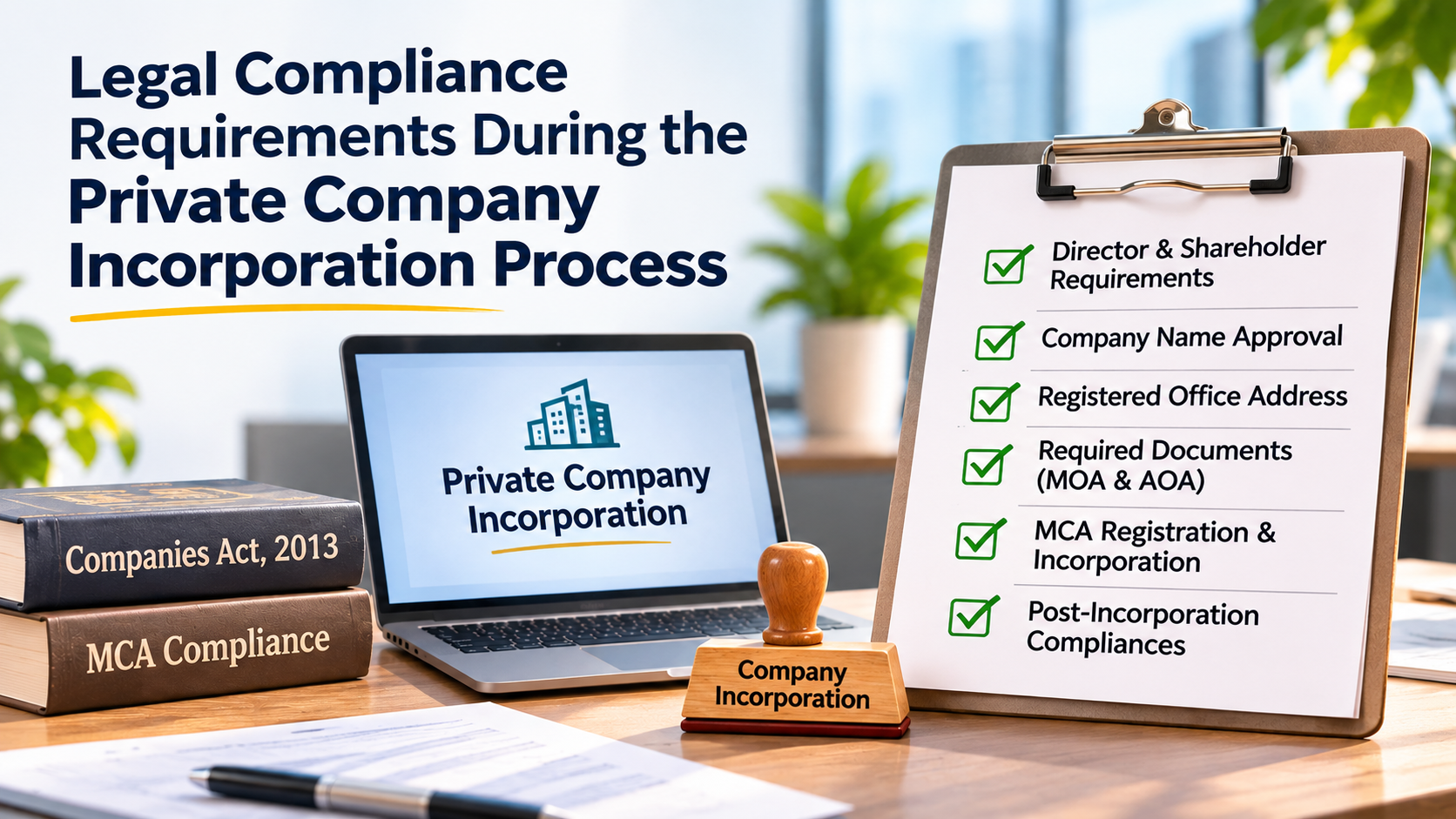
Starting a business can feel exciting. You have an idea you have thought about how a business could work and you’re ready to make a business real. Maybe you are planning to launch a startup, with a friend. Maybe you have been running a small business and now want to register a business as a company. Whatever your situation there is one step that you cannot overlook: making sure a business is legally registered. The Private Company Incorporation Process in India requires you to register your business according to the Companies Act 2013. You also need to finish all the steps with the Ministry of Corporate Affairs which is called MCA. If you want to register your business knowing about the private limited company registration can help you get the right papers ready and stay away, from usual errors.
For first-time entrepreneurs, company registration feels confusing. First-time entrepreneurs face forms to complete documents to arrange and legal requirements to understand. When first-time entrepreneurs know what is needed company registration becomes much easier to follow.
What Are the Legal Compliance Requirements for Private Company Incorporation?
To register a limited company, in India you usually need at least two directors. You also need two shareholders. The company must have an approved name. There must be a registered office address. There are incorporation documents that are required. You also need to meet the applicable conditions under the Companies Act, 2013.
Here’s what you’ll usually need:
- At least two directors and two shareholders.
- Digital Signature Certificates for relevant applicants.
- Director Identification Numbers for proposed directors.
- An approved company name.
- Memorandum of Association (MOA).
- Articles of Association (AOA).
- Registered office details and supporting documents.
- Required declarations and incorporation forms.
At least one director must also meet the prescribed residency requirement in India. The exact paperwork may differ depending on who is starting the company and what type of business it plans to operate.
Understanding the Private Company Incorporation Process in India
When you register a private limited company, you’re creating a separate legal entity. In simple terms, the company becomes legally distinct from the people who own it. It can enter into contracts, own property and carry out business activities in its own name.
Let’s say you and your friend want to start a digital marketing agency. You both invest money, find clients and begin offering services. Instead of running everything under your individual names, you decide to form a private limited company.
Once registered, the company can enter into agreements and manage its business operations as a separate legal entity. Another advantage is limited liability. Generally, shareholders are liable only for any unpaid amount on their shares, although legal exceptions can apply. However, registration also means taking responsibility for ongoing company compliance.
Key Legal Requirements for Company Incorporation
Before you begin filling out forms, it’s worth checking whether your proposed company meets the basic requirements.
1. Directors and Shareholders
A private limited company generally needs at least two directors and two shareholders.
The same two people can act as both directors and shareholders, provided they meet the legal conditions.
A private company can generally have up to 200 members, subject to statutory exclusions. You should also make sure the proposed directors have the required identification details and meet the applicable eligibility conditions.
2. Choosing and Approving Your Company Name
Choosing a name is often one of the fun things, about starting a business. Just because you like a name doesn’t mean that name will be accepted.
Your proposed name must follow MCA naming rules. It shouldn’t be identical or too similar to an existing company name or otherwise violate applicable restrictions.
For example, imagine you’ve chosen a name for your clothing brand, only to discover that another registered company already uses something very similar. Your application could face objections, which means you may need to choose another name.
Checking availability early can save time.
3. Registered Office Address
Every company needs a registered office where official notices and communications can be received. Depending on the circumstances, you may need:
- Address proof.
- A recent utility bill.
- Ownership or occupancy documents.
- A no-objection certificate from the property owner, where applicable.
The registered office must be established and verified within the applicable legal timelines.
Documents Required for Private Limited Company Incorporation
Documentation is where many applicants run into difficulties. Sometimes it’s a spelling difference, between two papers. Times the address doesn’t match, or a needed declaration is not there.
These might seem like small issues, but they can lead to queries or resubmission requests. During the Private Company Incorporation Process, you may need:
- PAN and identity proof of Indian directors and subscribers.
- Address proof of directors and shareholders.
- Passport and prescribed documents for foreign applicants.
- Registered office documents.
- Required declarations and consents.
- Memorandum and Articles of Association.
The documents depend on the applicants and the proposed company structure. It’s useful to review the company registration requirements before submitting your application.
Step-by-Step Private Company Incorporation Process
Once your documents are ready, the next step is submitting the incorporation application through the MCA portal.
Step 1: Arrange Digital Signatures
Digital Signature Certificates allow relevant applicants and professionals to sign incorporation forms electronically. Make sure the required signatures are available before filing.
Step 2: Apply for Company Name Approval
You can request name reservation through the applicable MCA process, including SPICe+ Part A. The proposed name is checked against the relevant rules.
Step 3: Prepare the MOA and AOA
The Memorandum of Association explains the company’s objectives and other fundamental details.
The Articles of Association describe how the company will be managed internally. Both documents should reflect the company’s proposed structure and activities.
Step 4: Submit the Incorporation Application
The application is generally filed through SPICe+ and the relevant linked forms. These may include e-MOA, e-AOA and AGILE-PRO-S, depending on the applicable requirements.
Step 5: Receive the Certificate of Incorporation
Once the Registrar of Companies approves the application, the company receives its Certificate of Incorporation and Corporate Identity Number (CIN). PAN and TAN are generally allotted through the integrated process. Your company is now incorporated, but some important compliance steps still remain.
Common Mistakes That Can Delay Company Registration
Even when you’ve prepared everything, small documentation errors can slow down the application. Some common mistakes include:
- Using different names or addresses across documents.
- Applying for a company name without checking restrictions.
- Providing incomplete registered office details.
- Entering incorrect business activity information.
- Making mistakes in the MOA or AOA.
- Forgetting required declarations or attachments.
For example, if the registered office address in your application does not match the supporting documents you may receive a request, for clarification. Reviewing the application carefully before submission can help avoid unnecessary delays.
Important Compliance Requirements After Incorporation
Receiving your incorporation certificate is an important moment. Your business now has a legal identity. But company registration isn’t the end of your compliance responsibilities. There are several requirements you may need to complete after incorporation.
Appointment of the First Auditor
For a company other than a government company, the Board generally needs to appoint the first auditor within 30 days of registration.
If the Board doesn’t make the appointment, the statutory procedure for appointment by members applies.
Commencement of Business Declaration
Companies that are incorporated with share capital usually need to file Form INC‑20A within one hundred and eighty days of incorporation before starting business or using borrowing powers subject, to the provisions.
Other Ongoing Compliance Requirements
Depending on your company and business activities, you may also need to:
- Open and maintain a company bank account.
- Issue share certificates within the prescribed timeline.
- Maintain statutory registers and accounting records.
- File annual financial statements and returns.
- Hold required board meetings.
- Obtain GST registration or industry-specific licences where applicable.
These responsibilities are easier to manage when you plan for them from the beginning.
Why Legal Compliance Matters From the Beginning
The Private Company Incorporation Process isn’t just about getting a registration certificate. It’s about building a proper legal foundation for your business.
Imagine your startup grows quickly, and an investor becomes interested in funding it. Before investing they might want to look at your incorporation papers, information about who owns the company and records, about following the rules.
If key papers are not there or the records are not kept the way you may have to do more work before the investment can continue. Keeping everything organised from the start can make future business decisions easier.
Frequently Asked Questions
1. How Many Directors Are Required for a Private Limited Company?
A private limited company generally needs at least two directors. At least one must satisfy the prescribed Indian residency requirement.
2. Can Two People Start a Private Limited Company?
Yes. Two eligible individuals can generally act as both directors and shareholders, provided the legal requirements are met.
3. Is a Registered Office Mandatory?
Yes. A company must have a registered office that’s able to receive official communications and meet the required establishment and verification rules.
4. How Long Does Company Incorporation Take?
The time it takes depends on how ready the documenters getting the name approved making sure the application is correct and the Registrar of Companies processing it.
5. Is GST Registration Required After Incorporation?
Not always. GST registration is needed based on the business activities the amount of turnover that applies and other legal rules.
Conclusion
Creating a limited company can be an exciting journey; however, it is important to make sure all legal rules are followed. When starting your limited company, you will have to choose your directors get papers ready and fulfill some rules after you register. Understanding what is needed can help avoid mistakes. Will help keep your business papers organized. If you want to register your company then using private company registration services in India can help you learn about the papers and rules you need.