


Copyright Compliance
Use covered music within the permission and conditions granted for the venue.

Practical support for recorded music, live performances, venue applications, licence scope, tariff review and renewals.
Music can shape a restaurant's atmosphere, but playing a commercial song inside business premises is different from listening to it privately. Background playlists, DJs, karaoke and live performers may involve public-performance or communication-to-the-public rights under the Copyright Act, 1957.
The licence position depends on the rights used and the repertoire being played. Musical and literary works, sound recordings and performer-related rights are distinct, so one permission does not automatically cover every layer of a song.
BIATConsultant helps restaurants map how music will be used, identify the relevant licensing route, prepare venue information and maintain a clear renewal and compliance record.
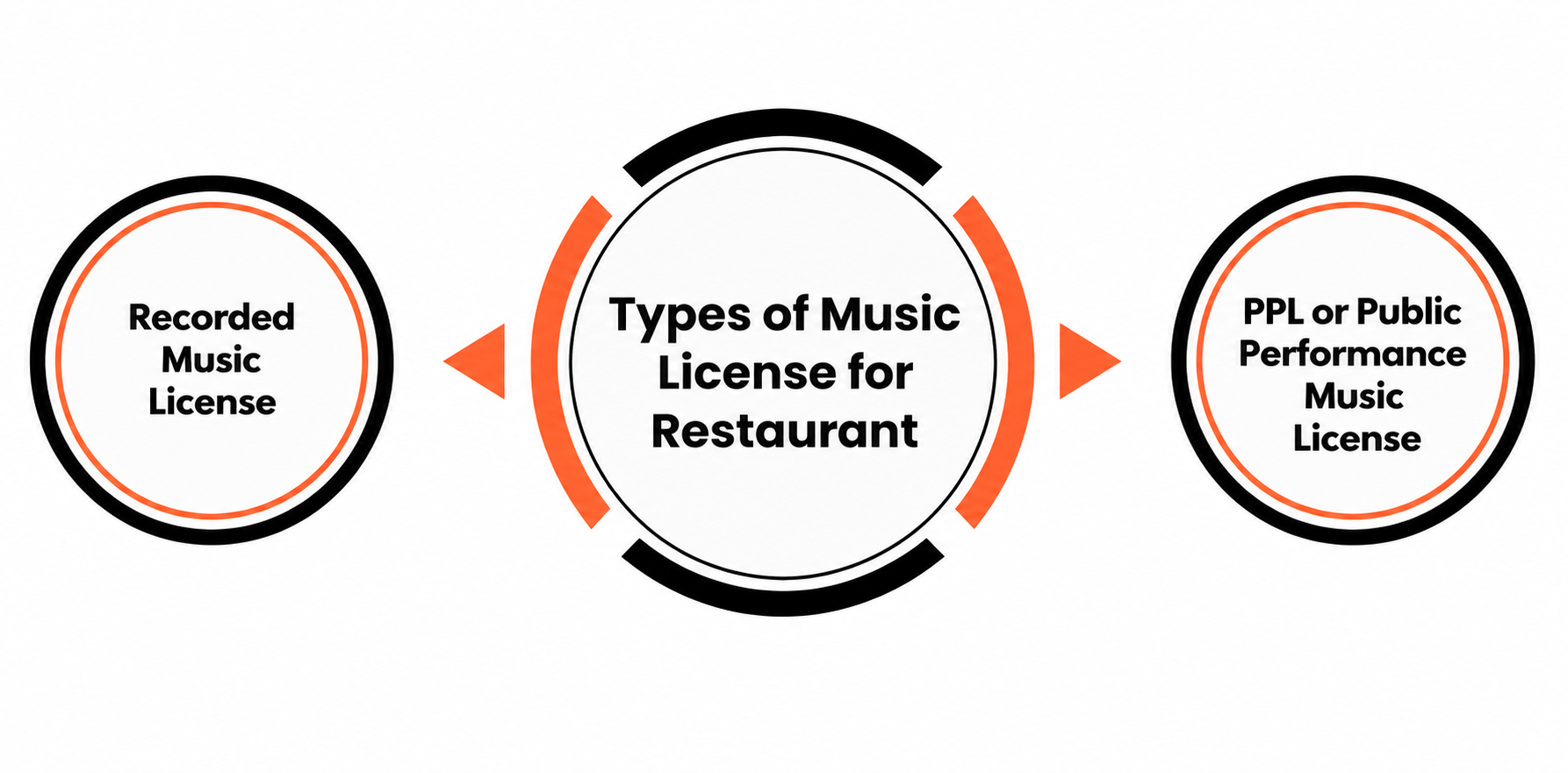
Music played through speakers, television, radio, a DJ system or a business playlist can use rights in both the sound recording and the underlying composition or lyrics.
A singer, band or acoustic performer may perform protected musical and literary works even when no commercial recording is used.
Ticketed evenings, festival programmes, parties, karaoke and promotional events may fall outside an ordinary background-music scope and should be assessed separately.
A consumer streaming subscription does not necessarily grant a restaurant the right to communicate music to customers in a commercial venue.
Use covered music within the permission and conditions granted for the venue.
Build a consistent atmosphere without leaving music rights as an afterthought.
Reduce the risk of notices, claims or disruption caused by unauthorised use.
Create repeatable music policies across outlets and formats.
Support the rights framework through which authors and other rightsholders are compensated.
Keep licence scope, venue details, invoices and renewal dates organised.
Document the venue, music sources, frequency, performance format and any special-event programme.
Separate sound-recording use from musical and literary works and check the relevant repertoire.
Approach the appropriate rightsholder, registered copyright society or authorised licensing entity for the required scope.
Compile entity, premises, seating, event, music-use, tax and contact details requested for assessment.
Check how the fee is calculated, what use is included and which activities require additional permission.
Complete the application and retain the issued licence, receipt and correspondence.
Update the licensing position when the restaurant expands, introduces live events or changes how music is played.
Background music, featured entertainment, DJs, karaoke and ticketed events may be priced differently.
Tariffs may consider seating, floor area or another measure of audience reach.
The city, restaurant format and commercial classification can affect the applicable category.
Daily use, occasional events and limited-duration programmes may attract different terms.
Each outlet should be checked; a licence for one premises may not automatically extend to another.
The required permissions depend on which works, recordings and catalogues are used.
Reviewed by: BIATConsultant CA, CS, legal, tax, finance, and compliance expert team.
Last reviewed: May 28, 2026.
Important note: Timelines, government fees, professional fees, document requirements, and approvals depend on the applicable authority, applicant profile, document readiness, and current regulatory process.
Commercial playback can involve public-performance or communication-to-the-public rights. The required permission depends on the music, repertoire, source and rights being used.
Usually, a personal subscription is licensed for private use and should not be assumed to cover commercial public playback. The platform terms and relevant copyright permissions should be checked.
Not necessarily. A song may contain separate rights in the composition, lyrics, sound recording and performance. The permissions needed depend on how the restaurant uses the music and who controls the relevant repertoire.
Yes. Live performances can use protected musical and literary works even without a commercial recording. Featured events may also have different terms from ordinary background music.
The fee may depend on venue type, location, seating or area, music format, frequency, event use, licence period and the applicable tariff. Current terms should be confirmed directly for the proposed use.
Do not assume so. Licensing is often premises-specific or calculated by location. Each outlet and its music use should be disclosed and confirmed.